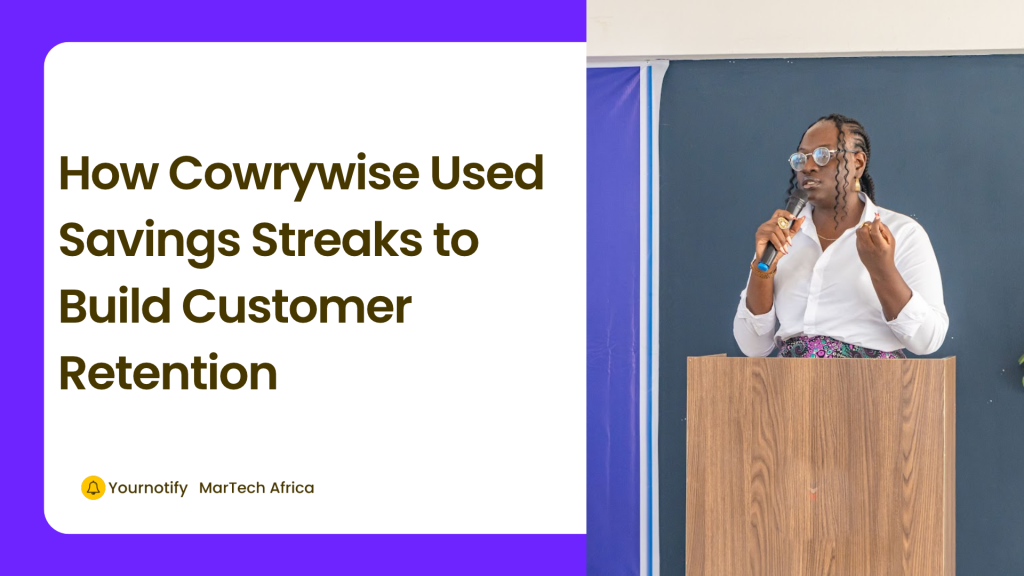
The Cowrywise customer retention strategy offers an interesting lesson for businesses struggling to keep customers engaged beyond their first few transactions. At MarTech Africa 3.0, Omolade Marquis, Senior Growth Marketer at Cowrywise, explained how the Nigerian fintech company used savings streaks, automated deposits, progress tracking, and customer recognition to encourage consistent saving habits.
Interestingly, the most fascinating part of this story isn’t the streak feature itself. It’s the problem that led Cowrywise to rethink how customers interact with its platform.
At the event, held in Lagos on February 28, 2026, Omolade presented a case study titled Turning Customers into Loyal Advocates: MarTech Approaches to Retention. Her presentation explored how Cowrywise combined behavioural insights and product design to address customer drop-off.
The central lesson was that customer retention becomes more sustainable when businesses make repeated engagement part of the customer experience, rather than relying entirely on promotional messages to bring people back.
Watch the full Cowrywise customer retention case study
At MarTech Africa 3.0, Omolade Marquis explains how Cowrywise used savings streaks, automation and behavioural insights to encourage repeat engagement.
The Retention Problem Cowrywise Needed to Solve
Getting people to start saving wasn’t Cowrywise’s biggest challenge. Getting them to remain consistent was the problem. During her presentation, Marquis explained that an analysis of customer behaviour, using data available in 2024, revealed a significant drop-off during the early months of saving.
According to the figures she shared, 58.7% of customers in the analysis had saved for only one to three months. This presented a significant challenge for a platform built around encouraging long-term financial discipline.
Customers were willing to begin their savings journeys, but maintaining that behaviour over time was proving difficult. It wasn’t necessarily a question of whether users understood the importance of saving. The challenge was creating an experience that helped them remain consistent despite forgetfulness, competing financial obligations, and friction in the payment process.
A customer who understands the value of a product but struggles to use it consistently may require a different intervention from someone who doesn’t see its value at all. Cowrywise needed to address both the motivation to continue saving and the practical obstacles preventing customers from doing so.
How Cowrywise Turned Savings Into a Habit
The company’s response centred on a simple idea: make saving a behaviour that customers could track, celebrate and sustain.
Rather than measuring each deposit as an isolated transaction, Cowrywise introduced a system that encouraged users to build a record of consistent saving.
1. Savings Streaks Made Progress Visible
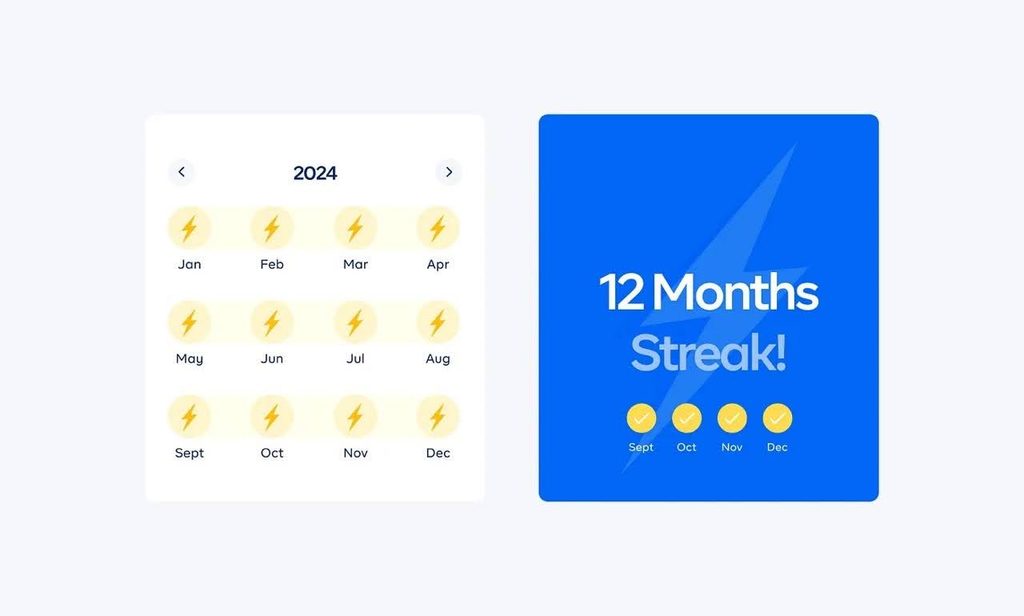
A savings streak represents consecutive periods in which a customer maintains their saving activity. Each successful month adds to that record, giving the customer a visible measure of consistency.
For example, someone who saves every month for a year can build a 12-month streak.
That number becomes more than a transaction history. It represents a personal achievement. Cowrywise deliberately designed its streaks around monthly rather than daily saving.
In its official article, Designing for Consistency and Financial Discipline by Leveraging Streaks, the company’s design team explains that monthly streaks accommodate different earning patterns. This is particularly relevant in Nigeria, where not everyone receives a fixed monthly salary.
Customers earning daily, weekly, or irregularly can still maintain a monthly savings habit without having to deposit money every day. The approach recognises that consistency doesn’t have to mean performing an action at the same frequency as everyone else.
When customers can see the progress they’ve made, returning to a product can become part of pursuing a personal goal rather than simply responding to another marketing message.
2. Automation Removed the Friction That Interrupted Saving
Motivation alone wasn’t enough. Marquis explained that some customers missed their savings commitments because of everyday friction, including forgetting to make deposits or encountering payment difficulties.
If saving required users to leave the app, copy account details, open another banking application, and complete a transfer, there were several opportunities for the process to be interrupted.
Cowrywise addressed this by making recurring deposits easier through automation, account linking and direct debits. Instead of remembering to initiate every transaction manually, customers could arrange recurring contributions.
For example, a salaried user could set up an automated deposit around their expected payday, reducing the need to repeat the payment process each month. This was a crucial part of the strategy.
Streaks gave customers a reason to continue. Automation reduced the effort required to do so. The broader principle applies well beyond financial services.
An e-commerce business might simplify repeat purchases. A subscription platform could make renewals easier to manage. A B2B software company might reduce the steps required to complete recurring tasks.
The specific implementation will differ, but the underlying question remains the same: What prevents customers from repeating an action they already want to take?
Cowrywise’s approach also aligns with its publicly documented Track and Notify system, which identifies incomplete customer actions and delivers contextual reminders to help users complete them.
The important distinction is that communication and product design work together. A reminder may prompt someone to return, but a simpler experience makes completing the action more likely.
3. Progress Tracking Became a Form of Customer Identity
Beyond encouraging repeat transactions, Cowrywise made saving something customers could feel proud of. During her presentation, Marquis described how users began associating their savings streaks with their personal identities.
A growing streak represented discipline, consistency, and progress towards financial goals. Customers could share milestones on social platforms, including WhatsApp, Instagram and X. These shareable moments had two potential benefits.
First, they reinforced the customer’s relationship with the product by making progress visible. Second, they exposed Cowrywise to other people through customers’ own social networks.
Someone sharing a 20-month savings streak might prompt a friend to ask how the system works or how to get started. In that sense, a retention feature could also contribute to word-of-mouth acquisition.
This is particularly interesting because it connects two objectives businesses often manage separately: keeping existing customers engaged and attracting new customers.
MarTech Africa’s article on customer acquisition, engagement and retention explores this broader relationship between customer activity, repeat engagement and advocacy. Cowrywise’s case offers a practical example of how those stages can reinforce one another.
The Psychology Behind Savings Streaks
There is also research supporting the behavioural principles behind streak-based experiences.
A 2023 study published in the Journal of Consumer Research, titled On or Off Track: How (Broken) Streaks Affect Consumer Decisions, examined how maintaining or breaking activity streaks influences subsequent behaviour.
The researchers found that intact streaks can encourage continued participation, while broken streaks can reduce motivation. They also found that allowing people to repair broken streaks can lessen some of the negative effects.
The findings are relevant to Cowrywise’s approach, although the research did not test Cowrywise specifically. A streak makes progress measurable. It can also create a sense of commitment because users have something they want to preserve.
However, that same mechanism creates a challenge. What happens when a customer who has spent months building a streak misses a deposit?
When Streaks Backfired, Cowrywise Had to Adapt
One of the most revealing parts of Marquis’s presentation was her discussion of customers who lost long-running savings streaks. Imagine saving consistently for 27 months, missing one month, and watching that record reset to zero. For some customers, this created frustration rather than motivation.
Cowrywise recognised that a feature designed to encourage consistency could become discouraging when users felt their previous effort had been erased.
The company responded by introducing Streak Survivor, a recovery mechanism that allowed customers to regain a broken streak after completing an eligible action within a recovery window. That action could involve saving, investing, or exploring another relevant product feature.
The purpose was to preserve motivation while encouraging customers to continue making financial progress. This is an important lesson in customer retention.
A successful engagement feature shouldn’t simply reward ideal behaviour. It should also account for interruptions, changing circumstances, and the possibility that customers will make mistakes.
Customers don’t always abandon a product because they have lost interest. Sometimes, the product experience makes returning unnecessarily difficult.
For businesses using gamification, loyalty programmes or progress-based rewards, Cowrywise’s experience highlights the importance of balancing motivation with flexibility.
Cowrywise Also Used Recognition to Reinforce Loyalty
Another part of the strategy involved acknowledging customers who maintained their savings habits. Rather than focusing recognition exclusively on users with the longest streaks, Cowrywise celebrated different categories of customers.
Users with relatively short streaks could receive recognition alongside those who had maintained the habit for several years. The company also used rewards, branded merchandise and shareable milestones to acknowledge customer achievements.
This created opportunities for customers at different stages of their journey to feel that their progress mattered. The principle is relevant for businesses developing loyalty programmes.
A reward system that recognises only a small group of top-performing customers may overlook newer users who are still developing the behaviours a business wants to encourage. A more inclusive system can acknowledge meaningful progress at different stages.
Recognition also doesn’t always have to involve expensive gifts. Personalised milestones, progress summaries and useful rewards can serve different purposes depending on the customer and product.
The Results: What Changed After Cowrywise’s Retention Initiatives?
According to the figures Marquis shared at MarTech Africa 3.0, Cowrywise’s retention initiatives were followed by improvements in customer engagement.
The presentation highlighted the following results:
| Metric | Figure shared |
| Initial behavioural finding | 58.7% of customers in the analysis had saved for only 1–3 months |
| Retention improvement target | 30% increase |
| Monthly active user growth target | 30% increase |
| Reported retention improvement | 20% increase |
| Reported month-on-month active user increase | 70% increase |
Scroll horizontally to see all columns.
These are figures presented by Marquis during the case study, not independently audited results. The presentation did not provide sufficient detail about the measurement period, exact metric definitions, or comparison cohorts to establish how much of each improvement was caused by the streak programme alone. Nevertheless, the figures reveal an important distinction.
Cowrywise wasn’t evaluating the initiative solely by how many people engaged with a savings-streak feature. Its objectives were connected to broader business outcomes such as getting customers to return and increasing the number of users actively engaging with the platform. This is how businesses should approach retention measurement.
A feature may attract considerable attention without necessarily improving sustained product usage. To evaluate its long-term effectiveness, companies should examine whether customers are returning, completing valuable actions, and maintaining those behaviours over time.
For a deeper explanation of how to track customer behaviour across different user groups, Amplitude’s guide to cohort retention analysis outlines how businesses can compare retention patterns across cohorts.
What African Businesses Can Learn From Cowrywise’s Customer Retention Strategy
Cowrywise’s experience offers several lessons that extend beyond fintech.
1. Make progress visible
Customers should be able to understand what they have achieved through continued use of a product. This might involve tracking savings, completed learning modules, loyalty milestones, or progress towards a business goal.
The important thing is that the milestone reflects something genuinely valuable to the customer.
2. Remove unnecessary friction
Businesses should examine the steps customers must complete before repeating an important action. Every unnecessary step creates another opportunity for customers to abandon the process. Relevant automation, simpler payment flows and better onboarding can help reduce those interruptions.
3. Use behavioural data to identify drop-off
Rather than sending the same message to every customer, businesses should identify when users become inactive and what actions they struggle to complete. This makes it possible to develop more relevant reminders, recovery journeys and product improvements. For more practical approaches, explore MarTech Africa’s guide to customer retention strategies for African markets.
Celebrate meaningful customer achievements
Recognition can reinforce positive experiences and give customers a reason to share their progress. However, rewards should reflect genuine customer value rather than pressure people into unnecessary transactions.
Design a path back for disengaged customers
Customers will sometimes miss deadlines, interrupt subscriptions, or stop using a product. The retention experience should make returning straightforward. Cowrywise’s streak recovery feature illustrates why giving customers a way to regain momentum can be more useful than penalising every interruption.
Frequently Asked Questions
What is Cowrywise’s customer retention strategy?
Cowrywise’s approach includes monthly savings streaks, automated recurring deposits, reminders, progress tracking, customer recognition, and streak recovery. These features are designed to encourage consistent saving and reduce the friction associated with repeated engagement.
How do savings streaks improve customer retention?
Savings streaks make consistent behaviour visible and give customers a sense of progress. They can encourage repeat engagement, particularly when supported by features that make the desired action easy to complete. However, poorly designed streak systems can also discourage users when progress is lost.
What results did Cowrywise report from its retention initiatives?
During MarTech Africa 3.0, Omolade Marquis reported a 20% improvement in retention and a 70% increase in month-on-month active users. These were presentation figures, and their precise measurement methodology was not provided.
What can other businesses learn from Cowrywise?
The main lesson is to design retention around valuable customer behaviours. Businesses can improve the customer experience by making progress visible, removing unnecessary friction, using relevant reminders, and recognising continued engagement.
Conclusion: Customer Retention Is Built Into the Experience
Cowrywise’s case study challenges a common assumption about customer loyalty: that businesses can retain customers simply by communicating with them more frequently. The company’s approach combined communication with product design.
Savings streaks made progress visible. Automation simplified repeat deposits. Reminders helped customers stay consistent, while recognition gave them opportunities to celebrate their achievements. When customers got frustrated by lost progress, Cowrywise introduced a recovery mechanism.
The strongest lesson from the presentation is that businesses should look beyond individual transactions and identify the behaviours that create sustained customer value. The question isn’t simply how to get customers to return. It’s how to make returning useful, rewarding, and easy enough to become part of their routine.
That is what makes Cowrywise’s customer retention strategy an important case study for African marketers, founders, and product teams.
This case study is based on Omolade Marquis’s presentation at MarTech Africa 3.0, with supporting references from Cowrywise’s official publications and independent consumer research.
For more practical African marketing case studies and industry insights, join the MarTech Africa community.